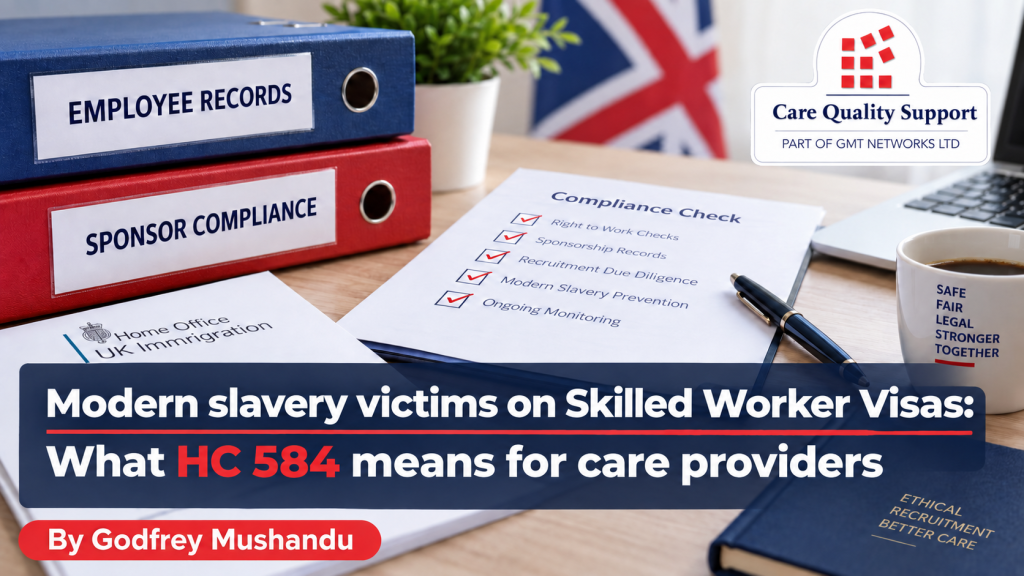
HC 584: A practical sponsor-compliance guide for domiciliary care, supported living and children’s services.
HC 584 Skilled Worker changes will affect how eligible Skilled Workers who are recognised as victims of modern slavery may work in the UK. The Home Office laid Statement of Changes HC 584 before Parliament on 3 September 2026. The relevant amendment takes effect on 8 October 2026. Care providers that hold a sponsor licence should use the intervening period to review their records, worker protection arrangements and escalation procedures.
The change is narrow and subject to specific conditions. However, it matters to domiciliary care, supported living and children’s services because many providers employ internationally recruited workers. It also highlights the need for ethical recruitment, accurate sponsorship records and safe routes for staff to report exploitation.
What the HC 584 Skilled Worker changes mean
HC 584 introduces a new provision in Appendix Skilled Worker. From 8 October 2026, a Skilled Worker who was referred into the National Referral Mechanism and received a positive Conclusive Grounds decision during their most recent period of permission may have their work conditions amended.
Once the conditions are amended, the person may undertake any work, including self-employment and voluntary work. The exception is work as a professional sportsperson or sports coach. The Home Office Explanatory Memorandum states that eligible victims will be able to work for any employer for the remaining duration of their existing permission.
This change can help a recognised victim leave an exploitative employment arrangement. It does not, by itself, grant a new period of immigration permission. It also does not remove the need for sponsors to meet their existing reporting, record-keeping and compliance duties.
Who Is Covered by the HC 584 Skilled Worker changes
- The person must hold permission under the Skilled Worker route.
- They must have been referred into the National Referral Mechanism.
- They must have received a positive Conclusive Grounds decision.
- That decision must have been made during their most recent period of immigration permission.
- The work conditions must be amended; the wording does not suggest that a referral alone automatically removes the existing sponsorship conditions.
Important distinction: A referral or a positive Reasonable Grounds decision is not the same as a positive Conclusive Grounds decision. Providers should not assume that a worker’s conditions have changed. They should obtain case-specific immigration advice where necessary.
Why HC 584 matters to care providers
Care services frequently depend on internationally recruited workers. Therefore, sponsors, Registered Managers and Nominated Individuals need to understand how immigration compliance connects with employment practice and safeguarding. The new rule does not reduce sponsor duties. Instead, it reinforces the importance of transparent recruitment, accurate employment records and prompt escalation when exploitation concerns arise.
HC 584 Skilled Worker Mobility
An eligible worker may be able to leave an exploitative arrangement and work elsewhere without first securing a new sponsor. This flexibility applies only for the remaining duration of the person’s existing permission and after their work conditions have been amended. Providers should check the individual’s current immigration status before changing their employment arrangements.
Accurate employment and sponsorship records
Poor records can create several risks. For example, inconsistencies between the Certificate of Sponsorship, actual duties, rotas, payroll, deductions and accommodation arrangements may raise employment and sponsor compliance concerns. Providers should be able to explain each difference and show that their records are current.
Safeguarding and escalation
Providers should not treat allegations of forced labour, coercion, debt, document retention, threats or other exploitation indicators as routine HR disagreements. These concerns may require safeguarding action, senior oversight and specialist advice. An internal investigation must not increase the worker’s risk or discourage them from seeking help.
Evidence of good governance
Commissioners, regulators and the Home Office may expect providers to show how they prevent exploitation and protect people who speak up. As a result, leaders should keep clear evidence of recruitment checks, staff guidance, audits, investigations, decisions and completed improvement actions.
Five actions before 8 October 2026
- Complete a focused sponsor licence self-audit
Check right-to-work evidence, Certificates of Sponsorship, salaries, hours, duties, changes of circumstance and Sponsor Management System reporting. Record each finding, the person responsible and the completion date.
- Test payroll, rota and role consistency
Compare sponsored duties with the work staff perform each day. Reconcile rotas, timesheets and payroll records. Investigate unexplained deductions, recurring shortfalls or work outside the sponsored role.
- Review recruitment fees and accommodation arrangements
Confirm that neither the organisation nor a recruitment intermediary has charged prohibited or exploitative fees. Make sure accommodation terms and deductions are transparent, documented and lawful.
- Strengthen independent speaking-up routes
Sponsored workers must be able to raise concerns safely and in a language and format they understand. They should not have to rely only on their direct line manager. Explain how the organisation will protect confidentiality, manage safeguarding concerns and prevent retaliation.
- Create an NRM escalation protocol
Define who receives a concern, who safeguards the worker and who informs the Nominated Individual. The protocol should also state when staff must obtain specialist advice and how they will preserve records. Do not investigate in a way that could place the worker at greater risk.
HC 584 Skilled Worker Sponsor Licence audit checklist
Use this checklist as a first-line review of your sponsorship and worker protection systems. Assign every No or Unsure answer to a named owner and set a clear deadline for action.
Right to work and sponsorship records
- Right-to-work checks were completed and retained before employment began.
- The Certificate of Sponsorship accurately reflects the worker’s actual role and duties.
- The salary paid meets the applicable requirements and matches sponsored records, subject to lawful deductions.
- Working hours reconcile across rotas, timesheets and payroll.
- Sponsor Management System records are current, and reportable changes have been handled on time.
Fees deductions and financial exploitation indicators
- No sponsored worker has been charged an unlawful or prohibited recruitment, sponsorship, Certificate of Sponsorship or administration fee.
- Any accommodation arrangement is documented, transparent and reviewed for fairness and legality.
- The organisation and its agents do not retain passports, bank cards or identity documents.
- Overseas recruitment partners are vetted, monitored and contractually prohibited from exploiting candidates.
Safeguarding speaking up and NRM readiness
- Sponsored staff have an accessible route to raise concerns independently of their direct manager.
- Staff know how to recognise and report possible modern slavery or labour exploitation.
- A named senior person is responsible for compliance-critical escalation and safeguarding action.
- Modern slavery risks are included in induction and refreshed through ongoing training.
- The organisation has a documented, trauma-informed response to an NRM-related concern.
Governance and evidence
- The modern slavery and worker exploitation policy has been reviewed within the last 12 months.
- Sponsor compliance is reviewed regularly at senior management or board level.
- There is a clear audit trail for previous right-to-work, payroll, recruitment or safeguarding concerns.
- The organisation has a tested response plan for an unannounced Home Office compliance visit.
How to respond to an exploitation concern
A provider’s first priority should be the worker’s immediate safety. Staff should listen, record the concern accurately and follow the organisation’s safeguarding and escalation procedures. They should avoid promises they cannot keep and should not confront a suspected exploiter without considering the risk to the worker.
The National Referral Mechanism is the UK framework for identifying and supporting potential victims of modern slavery. Only designated first responder organisations can make an NRM referral. Therefore, a care provider that is not a first responder may need to contact an appropriate body, such as the police or the relevant local authority, depending on the circumstances. Providers should seek specialist advice when the person’s immigration position or work conditions are unclear.
In addition, leaders should preserve relevant employment and safeguarding records. These may include recruitment communications, contracts, pay information, rota records, accommodation agreements and previous concerns. Access should remain limited to people who need the information for a lawful purpose.
How CQS can support your organisation
Care Quality Support can help care providers translate the HC 584 Skilled Worker modern slavery changes into a practical compliance programme. Support can include:
- An independent sponsor licence compliance audit benchmarked against current Home Office guidance and strong governance practice.
- A review of recruitment, HR, payroll, accommodation and safeguarding documentation for modern slavery risk indicators.
- A practical improvement plan with prioritised actions, owners and timescales.
- Preparation for a Home Office compliance visit and support following licence action or an NRM-related concern.
Contact our consultants to arrange a sponsor compliance review before the rule takes effect on 8 October 2026. Early review gives your organisation time to correct records, strengthen worker safeguards and brief responsible staff.