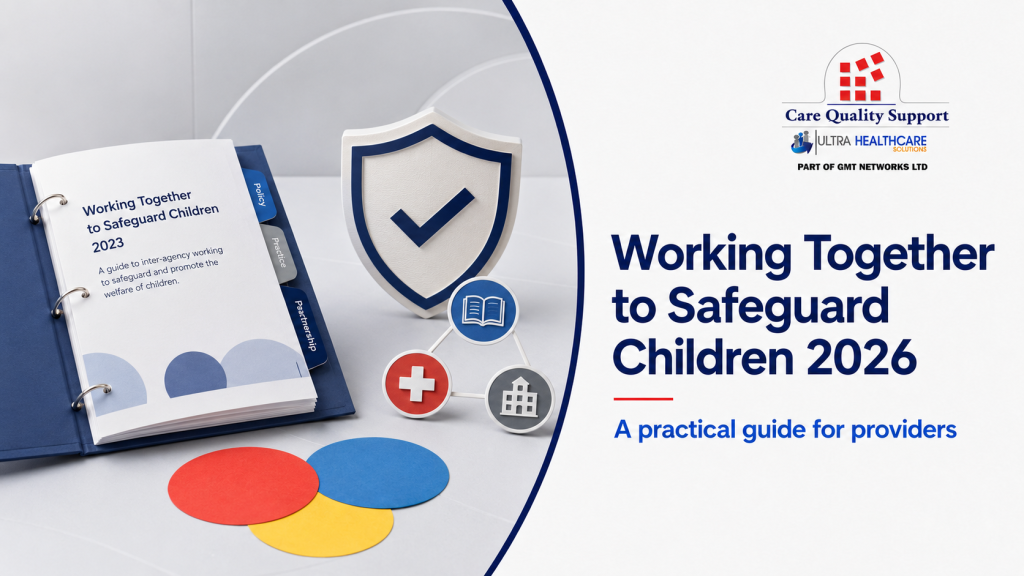
Working together to safeguard children 2026 brings important changes for organisations that support children in England. Published on 18 March 2026, it replaces the 2023 edition and strengthens expectations for early support, multi-agency working, anti-discriminatory practice and learning from serious incidents.
For children’s homes and supported accommodation providers for 16- and 17-year-olds, this is not an update to file away for later. Leaders should now check whether safeguarding policies, referral routes, staff guidance, risk assessments and recording systems reflect the revised expectations. The guidance applies to organisations and agencies with functions relating to children. It should be followed unless exceptional circumstances arise. Therefore, providers must understand not only what changed, but also what those changes mean in day-to-day practice.
Why working together to safeguard children 2026 matters
The revised guidance keeps the child at the centre while placing stronger emphasis on the whole family and the wider network around them. It also recognises that safeguarding risks rarely appear in isolation. A young person may face exploitation, domestic abuse, online grooming, discrimination and mental health concerns at the same time.
This matters to residential and supported accommodation services because staff often see changes that other professionals may miss. A shift in behaviour, unexplained gifts, new online contacts, repeated missing episodes or controlling relationships may form part of a wider pattern. Recording each concern separately can hide that pattern. Providers need systems that help staff connect information, share it promptly and escalate it through local procedures.
The guidance also reinforces the vulnerability of looked-after children and links safeguarding planning more clearly with care planning. In practice, a placement plan or support plan should not sit apart from safeguarding measures. Identified risks, protective actions, professional responsibilities and review arrangements should align.
The main changes providers need to understand
1. Family help under working together to safeguard children
Chapter 3 introduces Family Help as a combined approach to targeted early help and support under section 17 of the Children Act 1989. The aim is a more seamless offer, with consistent practitioner relationships and a Family Help plan led by a multi-disciplinary team.
For providers, this means staff should understand how their observations and records contribute to a wider plan. Where a child already has a Family Help, child in need, care or child protection plan, the provider’s support planning should complement it. Managers should also know who leads the plan, how updates are shared and how concerns are escalated when needs increase.
2. Assessments must recognise multiple and simultaneous harms
Working Together to Safeguard Children 2026 gives greater attention to domestic abuse, coercive control, teenage relationship abuse, child sexual abuse, group-based exploitation, honour- or faith-based abuse, risks to infants and online harms linked to offline danger.
As a result, risk assessments should move beyond single labels. For example, a missing episode may also involve criminal exploitation, sexual exploitation, substance misuse, debt, online contact or pressure from peers. Staff should explore how the risks interact and how they affect the child’s daily life.
Providers should review whether their assessment tools capture the child’s voice, communication needs, identity, relationships, online activity, community risks and known patterns. In addition, records should show what staff did with the information, not simply that they noted it.
3. Anti-racist practice in working together to safeguard children 2026
The 2026 guidance strengthens expectations for leaders to create inclusive, anti-discriminatory cultures. Practitioners should be able to identify and challenge racism and discrimination rather than only demonstrate general awareness.
A policy statement alone will not meet this expectation. Leaders should consider how discrimination may affect a child’s experience, trust in professionals, access to help and exposure to harm. Supervision, team meetings, incident reviews and safeguarding training should give staff the confidence to recognise bias, challenge discriminatory language and escalate concerns.
Providers should also review their data. Complaints, incidents, sanctions, missing episodes and safeguarding referrals may reveal disproportionality. Where patterns appear, leaders should investigate the reasons and record the action taken.
4. Looked-after children sit clearly within local safeguarding arrangements
The revised guidance confirms that multi-agency safeguarding arrangements include looked-after children. It also strengthens expectations around accountability, independent scrutiny, data sharing and evidence of impact.
Children’s homes and supported accommodation providers should understand their local safeguarding partnership arrangements. They should know the referral route, escalation process, Local Authority Designated Officer arrangements and relevant thresholds. Out-of-area placements require particular care because responsibilities and procedures may cross local authority boundaries.
Consequently, local contact details should remain current and accessible. Staff should never lose time searching for the correct route when a child may be at risk.
5. Section 47 work requires stronger multi-agency input
Where there is reasonable cause to suspect significant harm, section 47 enquiries remain the local authority’s responsibility. However, the guidance strengthens expectations for robust multi-agency assessment, direct work with the child and strategy discussions, especially where child sexual abuse is suspected.
Providers may hold vital evidence. Daily records, body maps, missing-from-home information, disclosures, online safety concerns and changes in presentation can inform decisions. Staff should provide clear, factual and timely information while distinguishing what they observed from what another person reported.
Meanwhile, managers should make sure staff understand that a referral does not end the provider’s responsibility. The service must continue to protect the child, follow agreed actions, preserve evidence and report any further concerns.
Serious incident learning: understand the 15-day rule
Chapter 5 has been restructured and should be read in full by safeguarding leads. It clarifies that a serious child safeguarding incident notification must still be made when a child’s identity is not yet known. Notifications should include all affected children and consider the wider family and systemic context.
However, providers must understand the timescale correctly. The revised 15-working-day requirement applies to safeguarding partners submitting a rapid review to the Child Safeguarding Practice Review Panel after the serious incident notification. It does not replace a provider’s separate duties to report safeguarding concerns or make required notifications to Ofsted without delay and within the timescales that apply to its service.
The guidance also expects learning from incidents that fall below the serious incident notification threshold. Therefore, providers should use incident reviews, safeguarding audits, complaints, missing episodes and near misses to identify patterns and improve practice.
A practical working together to safeguard children 2026 audit
Registered providers should complete a focused audit rather than making superficial wording changes. Start with the following actions:
- Update the safeguarding policy to reference the 2026 guidance and its expanded forms of harm.
- Check local multi-agency referral, consultation and escalation procedures, including arrangements for out-of-area children.
- Align placement plans, support plans, risk assessments and safeguarding plans.
- Test whether assessment tools identify multiple, connected and changing harms.
- Review how staff capture the child’s voice and complete direct work with children.
- Strengthen anti-racist and anti-discriminatory expectations in policy, induction, supervision and practice.
- Confirm that staff understand information-sharing duties and know when concerns override routine confidentiality.
- Audit incident, missing-from-home, complaint and referral data for patterns and disproportionality.
- Review serious incident, Ofsted notification and internal escalation procedures so each duty and timescale is clear.
- Record learning from near misses and incidents below the serious incident notification threshold.
Providers should also brief staff on the changes and test understanding through supervision, scenarios and file audits. Evidence matters. Inspectors will look beyond updated documents to how leaders embed guidance in practice and how actions improve children’s safety.
Turn the 2026 guidance into safer practice
Working Together to Safeguard Children 2026 raises the standard for joined-up, inclusive and evidence-led safeguarding. For children’s homes and supported accommodation services, the immediate priorities are clear: understand Family Help, assess connected harms, strengthen multi-agency working and correct any gaps in serious incident procedures.
As Care Quality Support, we help providers review safeguarding policies, audit referral and escalation procedures, strengthen risk-management documents and prepare evidence that reflects current Ofsted expectations.
Do not wait for an inspection or safeguarding incident to expose an outdated process. Review your systems now and make sure every member of staff knows what to do when a child needs help, support or protection.